Serendip is an independent site partnering with faculty at multiple colleges and universities around the world. Happy exploring!

PCSJS Portfolio's picture

Students for Immigrant Justice

One of the most important things I have done throughout my time at Bryn Mawr is help to start the Students for Immigrant Justice group on campus, and to push for immigrant rights both at Bryn Mawr and around the country.  My contribution is small and paltry compared to what some of my classmates have done – many of whom are immigrants themselves – but I still feel like my small steps of solidarity mean something.  Last spring, in February, 2012, a plenary resolution calling for the just treatment of undocumented students at Bryn Mawr was postponed.  One of the main changes we were calling for was a statement from the Admissions office stating their willingness to receive applications from undocumented immigrant students.  After plenary, our student group started a campus-wide petition, and got enough signatures to convince admissions to add a new page on undocumented applicants on their website.  Much of our campus work has been paralleled with larger rallies, protests, and sit-ins looking at national immigration policy, and the unfair treatment of people incarcerated in federal detention centers.

PCSJS Portfolio's picture

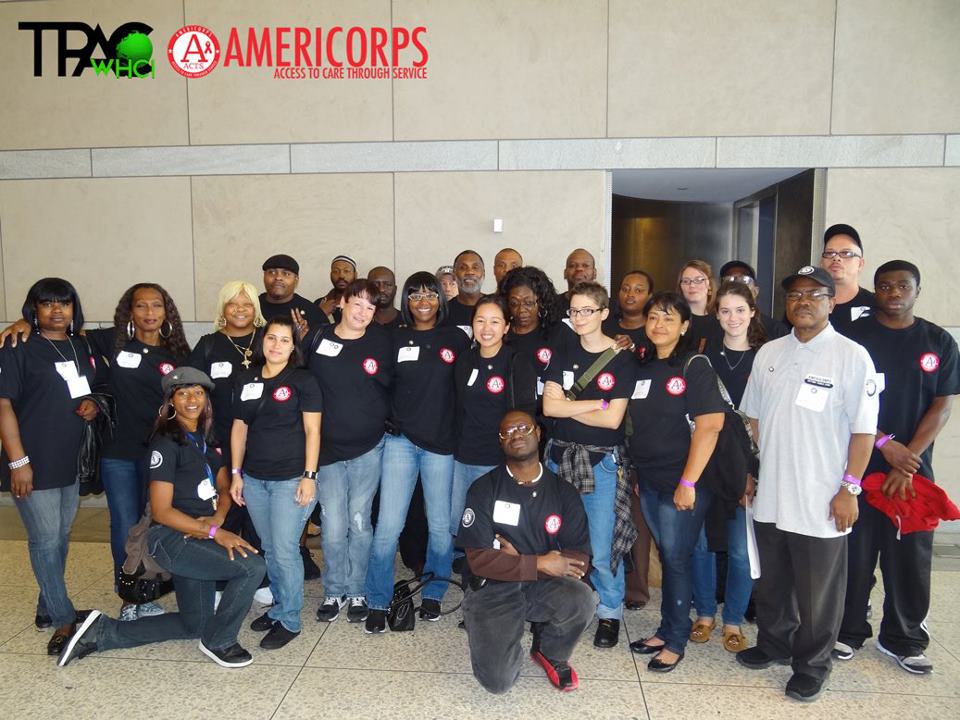
TPAC Americorps

Serving as an AmeriCorps service member with The Philadelphia AIDS Consortium’s (TPAC) ACTS Program was an important stepping stone to the HIV work I do today.  I had the opportunity to do a lot of direct service work for the first time, in case management, HIV prevention, and HIV testing, but also took part in a year-long training program.  My AmeriCorps training ran the gamut from looking at access to social services, to effective intervention strategies, to cultural competency.  While all of the topics we covered over the course of the year were important, and have helped me immensely in doing subsequent work, I was also left with many questions, some of which I feel embarrassed to admit.

PCSJS Portfolio's picture

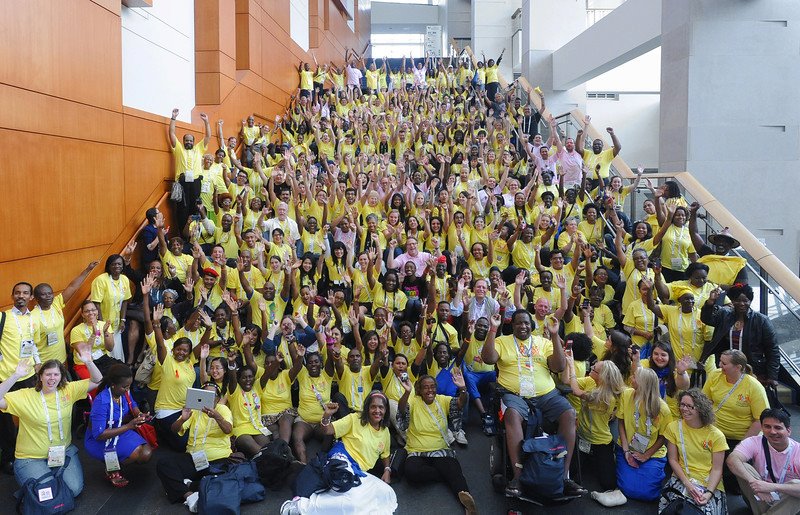
AIDS 2012

PCSJS Portfolio's picture

PCSJS Meetings

When I think back to the Peace, Conflict, and Social Justice Studies Concentration meetings I’ve been a part of over the last few semesters, I am not sure what to what to make of them.  The twice-per-term meetings were an important part of being in the Concentration, and served the obvious purpose of helping us all figure out the logistics of choosing classes and thinking about our portfolios.  But, beyond that, I’m still figuring out exactly what their purpose was.  Given the focus of the concentration, part of me had expected that we’d all go into the room and figure out how to start tackling some of the most pressing human rights concerns of the era.  Needless to say, our meetings were not quite so generative, but they did still feel like they were a part of a larger project or journey.  As scholars of peace – or at least students of the discipline – I do think that we all probably have a lot of insight about the field, and about how to avoid war and conflict.  But, even though our discussions were often more personal than academic, I do think that they played a role in the larger quest for peace.

PCSJS Portfolio's picture

Paul Offit

Paul Offit’s work in vaccine development does not have an obvious connection to Peace, Conflict, and Social Justice studies, beyond the immediate social justice implications of providing the rotavirus vaccine he developed to children around the world.  But when I heard Offit speak at Bryn Mawr in April, 2009 I drew immediate connections to the Peace and Conflict Studies field.  Offit has become a controversial figure in some communities of parents whose children have autism, due to his outspoken criticism against celebrities like Jenny McCarthy who draw a link between autism and routine childhood vaccines.  Such claims are largely unfounded, and I think that Offit is right to actively dispel these myths, because the risks associated with a resurgence of childhood diseases like measles and rubella is much greater than the almost null chance that the MMR vaccine causes autism.

PCSJS Portfolio's picture

Ruth Messinger

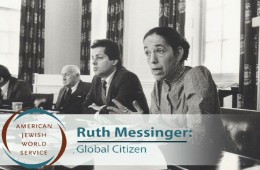
Ruth Messinger’s visit to Haverford, where she gave a lecture in one of my classes, had dinner at the Haverford Sukkah, and gave a public lecture, was meaningful on a number of different levels.  The obvious was that it was inspiring to hear about her work with the American Jewish World Service, her past political involvement, and her ideas on how to solve some of the world’s most serious problems.  As someone who has concerns and skepticism about US involvement in humanitarian work around the world, it was refreshing to hear about the ways in which AJWS tries to let local community-based organizations guide funding focuses and share their insight.

PCSJS Portfolio's picture

Stephen Lewis

My autographed copy of Stephen Lewis’ book “Race Against Time” has sat proudly on my different bookshelves as I’ve moved around the world since I heard him speak at Haverford.  The former UN ambassador from Canada spoke about his experience dealing with the HIV epidemic around the world both through his diplomatic work and with his foundation, AIDS-Free World.  One of the most moving parts of his talk was his focus on how HIV affects grandmothers around the world, who have assumed care of their grandchildren, particularly in many parts of sub-Saharan Africa, after their parents have passed away.  His stories about these “unsung heroes” were so powerful because they really highlighted the ways in which diseases like HIV can have much more pernicious societal effects than what is readily obvious.  And, like with many other global crises, such as famine, women sometimes shoulder an uneven burden.

PCSJS Portfolio's picture

Lilly Ledbetter

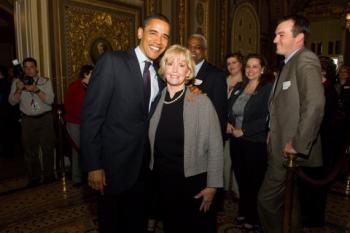
In March, 2010 Lilly Ledbetter – famous as the face and name behind the Lily Ledbetter Fair Pay Act – came to Bryn Mawr to talk about her experience finding out that she had been paid less than her male counterparts after twenty years as a manager at GM.  Although a lower court  had ruled that GM had to pay her back wages, the Supreme Court overruled the decision, saying that she should have sued immediately after receiving the unfair paychecks (which she didn’t know were unfair until many years later).  Ledbetter became an advocate for equal pay, and eventually was able to help pass the bill bearing her name.  Although Ledbetter is clearly a capable advocate and activist, when she came to Bryn Mawr she did not do very much of the speaking. Instead, Jocelyn Samuels, a senior counselor to the assistant attorney general in the civil rights division of the Department of Justice gave a long speech, with Ledbetter only giving a few brief remarks at the end of the event.

PCSJS Portfolio's picture

CPGC Fellowship

The summer after my freshman year I had the privilege of getting a grant from the CPGC to go to Indonesia with Haverford anthropology professors Degung Santikarma and Leslie Dwyer.  Together with other students, I participated in a month-long multidisciplinary seminar focusing on social justice and human rights issues in Indonesia, and then conducted my own research project looking at women and HIV/AIDS stigma.  Throughout this trip, I was affiliated with both PUSDEP, an institute at Sanata Dharma University that does research on transitional justice efforts in Indonesia, as well as Taman 65, a community-based organization that does peace and reconciliation work pertaining to the 1965 political massacres in Indonesia.  That summer was profound for me, because it was the first time that I felt like I had a personal stake in human rights issues – for a long time, the idea of human rights seemed like an abstract discourse that I agreed with and wanted to study, but at the same time was a concept that didn’t necessarily pertain to my own life.  The many interpersonal relationships I formed during my first trip to Indonesia were what cemented human rights as being about these many new friends, but also about my own family and social network, as well as myself.

PCSJS Portfolio's picture

Sociology of Sex and Gender

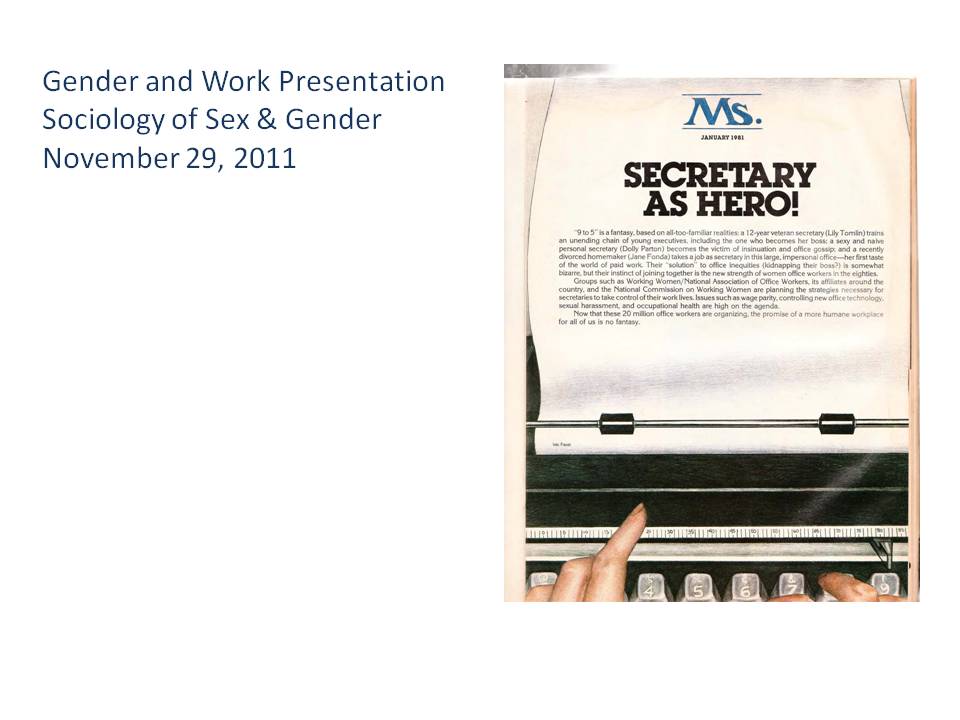
I went into the first session of “The Sociology of Sex and Gender” skeptical that I would be able to learn anything new – and unsure of whether or not I even wanted to take the class.  I had never taken a course that was explicitly cross-listed with Gender and Sexuality Studies, but I still felt like I knew the basics.  I had been exposed to a lot of feminist and queer theory in other contexts, and I was also pretty well versed in criticisms that wanted to theorize using broader intersectionalities.  And while these were all topics that were rehashed over the course of taking the class, the projects I was able to do really helped to connect these theoretical ideas with the work I was doing in public health and HIV.  In fact, for my final paper, I was able to do fieldwork, together with two classmates, at ASIAC, the organization where I work.  I also had a lot of fun in the class.  Below is a presentation I did looking at women and work, by exploring old magazine articles.

Syndicate content