Serendip is an independent site partnering with faculty at multiple colleges and universities around the world. Happy exploring!

PCSJS Portfolio's picture

Bubugan Free School and Anak Tangguh

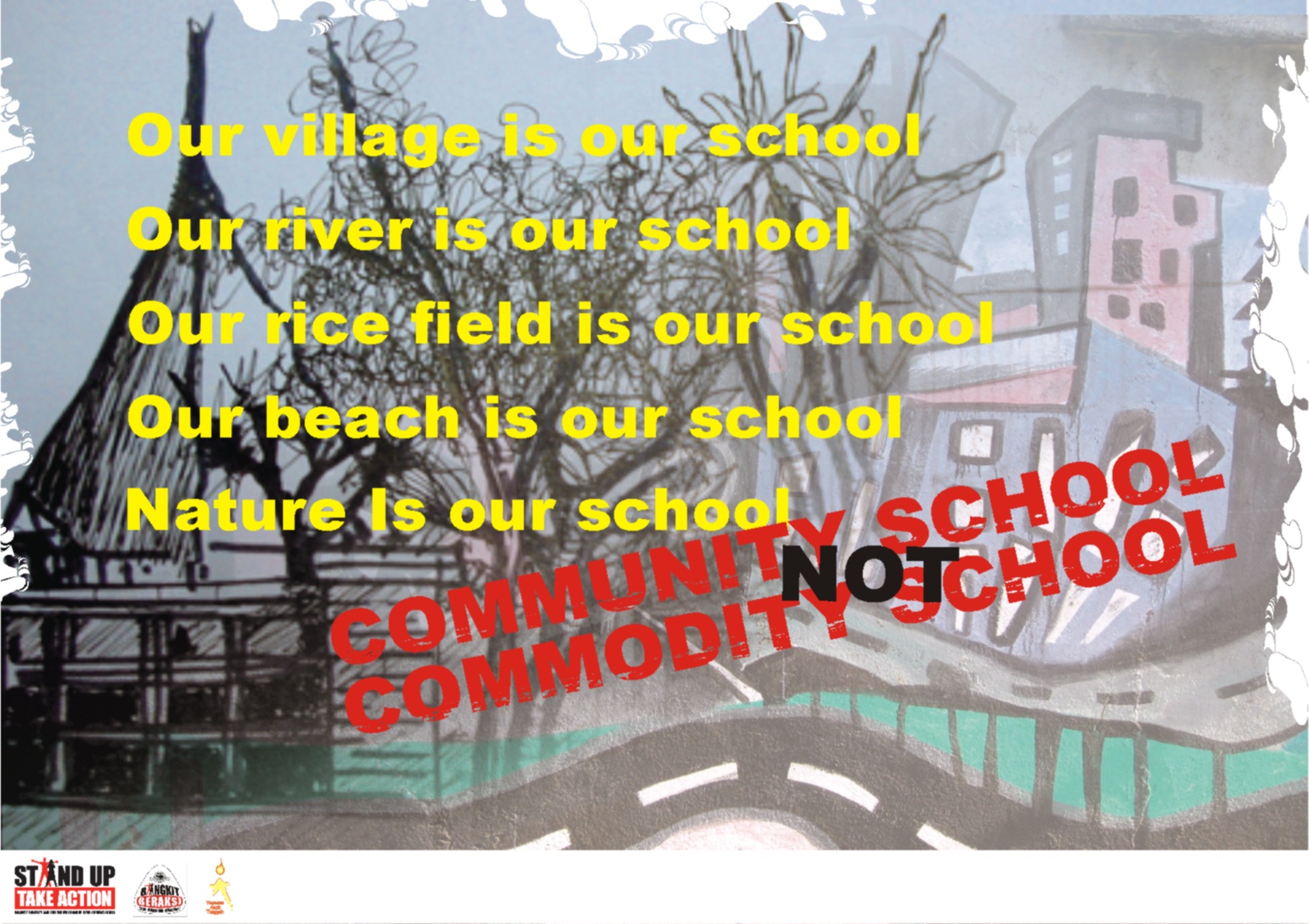
The first time I traveled to Indonesia, in the summer of 2009, I was lucky enough to be introduced to a wide range of people doing important community work.  Some of these people were helping to set up two different (but similar) free education programs for children – the Bubugan Free School and Anak Tangguh.  The former focuses on providing after-school and weekend programs to the children of Javanese immigrants, who face discrimination and prejudice in Denpasar, Bali’s capital city.  The latter organization offers programming to all children in a Denpasar suburb, and takes pains to include a wide range of kids.  Although the programs are different in many important ways, one striking commonality was the focus on teaching children to speak English.  Although I never explicitly heard anyone explain why learning the English language was crucial for future success, there seemed to be the tacit assumption that the US has hegemonic influence in today’s globalized world and English is the language of power. 

PCSJS Portfolio's picture

Genjer Genjer

In the spring of my freshman year, I found out that I’d received a grant from Haverford’s Center for Peace and Global Citizenship to travel to Indonesia with two Haverford anthropology professors and would have the opportunity to do independent research.  I knew little about Indonesian politics, except for the research I’d done as part of my application.  The two professors organizing the trip were finishing a book together on the 1965 political massacres in Indonesia, when up to a million people linked to the communist party were killed by the newly formed Suharto regime.  Although I’d done some background reading on the massacres, I had little understanding of their current political context, or how Indonesian society was dealing with this violent history, so I was excited when I heard that an LA-based filmmaker would be screening his documentary, 40 Years of Silence at Haverford.

ekthorp's picture

Final Reflection

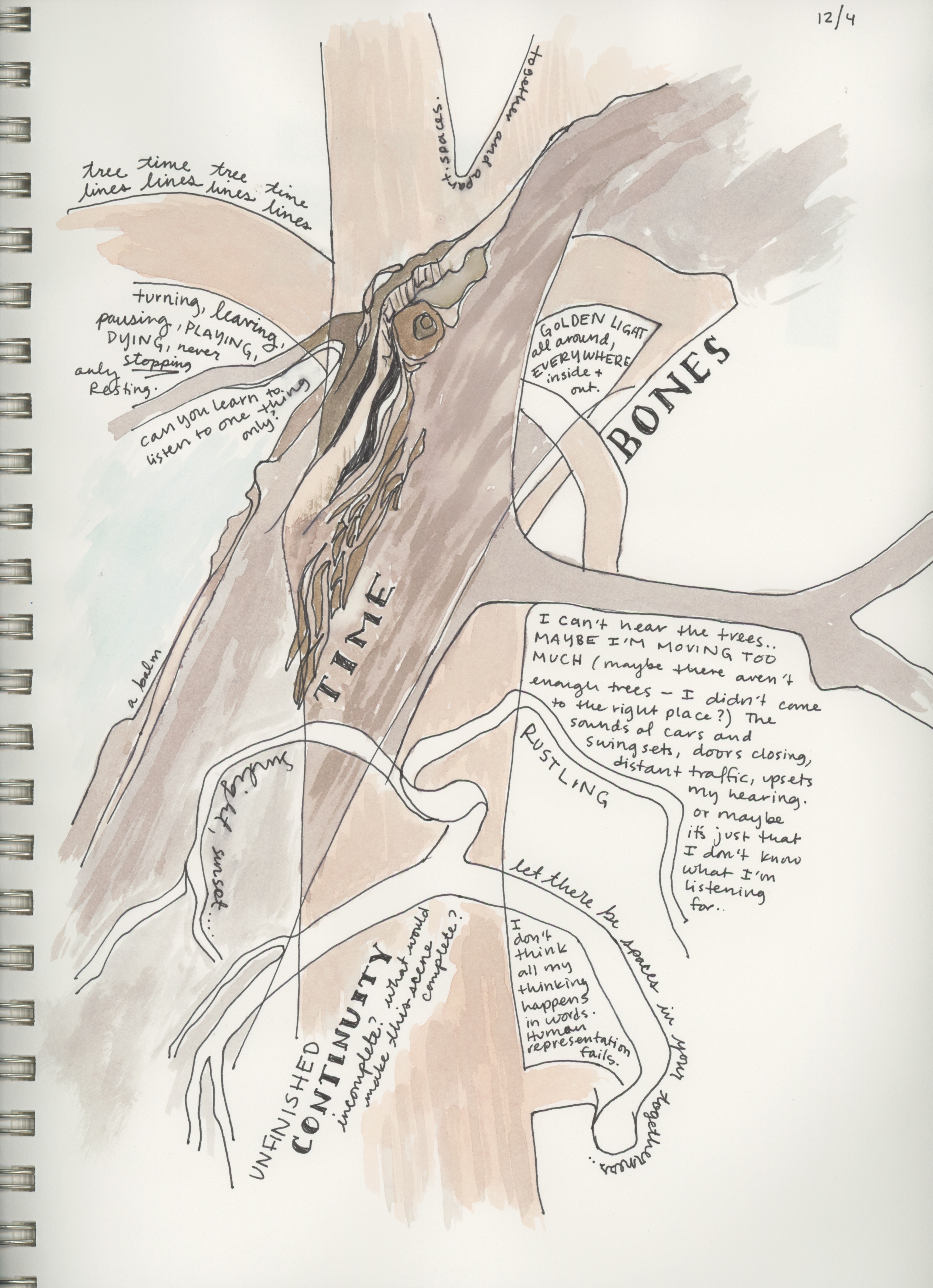
It is really hard for me to write this week. Not just because it is cold, or my battery is dying, or because I don’t want to. But because coming here, for the “last time” this semester (I say “last” because I may visit on my own before I leave) forces me to think about how this semester has gone so far. In a way, Rhoads Pond has really reflected the way this semester has gone for me. In the beginning of the year, everything was beautiful. The pond was green and lush, absolutely gorgeous with life. Now, it’s different.  Sandy had strewn the pre-existing shrubbery away, leaving a barren and brown landscape.  Geese still stay on the water, and the reflections on the ripples are still mystically magnificent, but the tones are duller, muted. That’s how I’ve been feeling as the semester draws to an end.

Mosquita y Mari

About the Film
Year Released: 
2012
Running Time: 
85
Documentary/Fiction: 
Fiction
Synopsis: 

With this auspicious feature film debut, Aurora Guerrero explores the complexities of a budding friendship between two Chicana high schoolers in Los Angeles’s Huntington Park. Yolanda is stellar in her studies and makes her parents proud, while Mari has just moved to town with her undocumented family. On her first day of school, Mari is assigned to be Yolanda’s study partner. After a rocky start, the two find a bond that confuses them at times. Guerrero’s steady direction allows more intimate understanding of the girls’ aspirations and their families’ expectations.

With evocative performances from Fenessa Pineda as Yolanda and Venecia Troncoso as Mari, we experience their struggles: adjusting to their new reality; and charting their own paths in the face of parental sacrifice, immigration experiences, and peer pressure. InMosquita y Mari, Guerrero delivers an impressionistic meditation on desire, set in a vibrant Latino community, and emerges as an exciting new voice in American cinema.

Written by Bird Runningwater, Sundance Film Festival Archives

Poster Image: 
Director
Film Director: 
Production Info
Reported or Estimated Budget: 
$80000
Location: 
Huntington Park, Los Angeles, CA
Categories About the Film
Genre: 
coming of age
drama
family
highschool
romance
Keywords: 
coming of age
education
family
glbtq
immigration
sexuality
urban life
Racial/Ethnic Affiliation: 
Chicano/a
Filmmaking Team
Writer's Name: 
Aurora Guerrero
Producer: 
Charlene Blanco Agabao and Chad Burris
Cinematographer: 
Magela Crosignani
Primary Cast: 
Fenessa Pineda, Venecia Troncoso, Joaquín Garrido, Laura Patalano, Dulce Maria Solis, Marisela Uscanga, Melissa Uscanga, Omar Leyva
Exhibition/Distribution Info
Distributor: 
The Film Collaborative
Box Office Earnings: 
$8614
Where to find it/How to get it: 
Direct from Distributor
Festivals/Awards: 

World premiere at Sundance Film Festival. Nominated for Independent Spirt Award 2012-Producers Award: Chad Burris. Won Best Actress and Best First Feature at Outfest 2012. Won Queer Award at Torino LGBT Festival 2012. Won Audience Award at 12th Annual Pink Apple Film Festival. Won Best Narrative Feature at Cinefestival 2012.

et502's picture

Intersectionality

Live Nude Girls Unite!

About the Film
Year Released: 
2000
Running Time: 
75
Documentary/Fiction: 
Documentary
Synopsis: 
“Thanks for the six years of ballet lessons, Mom,” says Julia, a wisecracking dancer at San Francisco’s Lusty Lady peepshow. Considered progressive, the club attracts self-confident, intelligent, educated performers. When a coworker is unjustly fired, they decide to join a union in a scenario right out of Norma Rae. Julia decides to document the union’s developments, which start out as an effort to protect their jobs. But before long, it turns into a fight for human dignity as the women demand an end to rules that classify them by race, hair color and breast size. Management brings in the union-busting corporate lawyers; workers are fired for joining picket lines. When your struggle is on the nightly news, there’s no way to avoid telling your family what you’ve been doing, which pushes Julia to come to terms with her mother.
Pendás, Miguel. “Live Nude Girls, Unite!” San Francisco International Film Festival. Accessed December 2 2012. http://history.sffs.org/films/film_details.php?id=2900&searchfield=.
Poster Image: 
Director
Film Director: 
Production Info
Reported or Estimated Budget: 
~$10,000
Location: 
San Francisco
Other Interesting Production Info: 
Query got a Pacific Pioneer Fund grant for $7,000 to help fund the film.
Categories About the Film
Genre: 
comedy
documentary
Keywords: 
activism and social justice
glbtq
sexuality
urban life
Racial/Ethnic Affiliation: 
North American
Filmmaking Team
Writer's Name: 
Julia Query, Vicky Funari
Producer: 
Julia Query, John Montoya
Cinematographer: 
Julia Query, John Montoya, Sarah Kennedy, Vicky Funari
Primary Cast: 
Vicky Funari, Julia Query, Stephanie Batey, Darrell Davis, Joyce Wallace
Exhibition/Distribution Info
Distributor: 
First Run Features
Box Office Earnings: 
$84706
Where to find it/How to get it: 
DVD widely available
Festivals/Awards: 
  • World premiere at SXSX in 2000.
  • At the San Francisco International Film Festival in 2000, it won Audience Award for Best Feature and a Golden Spire Award for Bay Area Documentary. 
  • Boston Women’s International Festival of Women’s Cinema in 2000. 
  • Los Angeles Outfest in 2000.
Analysis
Personal Film Review and Cultural Context: 

Live Nude Girls Unite! captures the first successful movement to unionize strip club workers in the US and is the debut film of co-directors Julia Query and Vicky Funari, and premiered at SXSX in 2000. We follow Julia Query and her fellow dancers at The Lusty Lady, a strip club with the reputation of being feminist and empowering, the film footage crosscut with clips of campy animation that is both purposeful and self-aware. The selectively grainy film quality and handheld camerawork of Live Nude Girls Unite! sutures the viewer into the world of San Francisco’s strip club dancers, transporting the audience into the struggle and frustration of union organizing. These workers and their allies fight to resist exotification and lesser work opportunities for people of color while countering the strip club industry’s idea of “marketable,” mainstream beauty. As co-director, Vicky Funari thoughtfully negotiates direction so Query can have authorship of the film and be a subject at the same time, an untraditional circumstance in the industry. 

- Maria Aghazarian

ekthorp's picture

Poem From our Outdoor Adventure

So I'm finally posting the poem we wrote collectively as a summation of Monday's exporations at Ashbridge Park. I attempted to scan in the poetic product of Monday's wandering, but due to both my inability to work technology and the failure of Canaday's scanners, I was unable to. I thought it would have been really cool, though, if we had all been able to see eachother's handwriting and marks upon the paper. I might still scan it in later and attach it as a comment to this post, but we'll see. For now, here it is:

Stagnant water breeds oily residue

Slowly moving water

a plastic bottle, caught by a branch in the stream

Washed up against a bush with berries like polished red glass

What would it take for that sound to stop?

New experiences and knowledge

History, biology, and poetry swirling together to create this knowledge

A knowledge we have always had-just perhaps forgot.

What fuels the remembering? The air of the trees, the seeds, the mud?

All I remember now in detail is that there were minnows in the water so the rocks looked lovely.

Water trickled, running like thoughts.

Man cuts, stabs at the drumb. The water rolls and heals.

As the sunshine melts the frost on the grass, I breathe.

ekthorp's picture

Is Butchering Cruel

I was listening to the most recent This American Life, which centered entirely around the theme of animal sacrifce, and I wanted to share one of the stories from the show because I feel like it directly relates to our dicussion of Coetzee/Costello's beliefs. The journalist, Camas Davis, periodically holds classes that teach people how to raise and butcher animals for food. These classes somehow, counteractively to popular perception, actually tend to prevent people from eating meat by introducing them to the complexities of home-butchering/the meat industry in general. II really loved the story, and thought alot of Davis's quote directly responded to Costello's desire to realize the consciousness of animals.  

http://www.thisamericanlife.org/radio-archives/episode/480/animal-sacrifice?act=2

Hope you guys like it!

Srucara's picture

Surrendering to All That Is - Sacred Paths

"We are wounded in all the right places" - from Wounded by 1 Giant Leap

See video

Daughters of the Dust

About the Film
Year Released: 
1991
Running Time: 
113
Documentary/Fiction: 
Fiction
Synopsis: 

Daughters of the Dust is a drama about the struggle between tradition and progress. Set in the early 1900s, it is the story of the Pazants on the eve of the family's migration from their Sea Island home to the mainland, leaving their land and legacy behind. Nana Pazant, the eighty-eight-year-old matriarch of the family, fights to keep the family she raised together on the island to maintain the traditions handed down by her African ancestors. Eula, her granddaughter, is pregnant with the baby of a man whom her husband believes raped her. Haagar Pazant would like to throw off the traditions of the past for the opportunitites of the future which await her and her family in the North. She wishes to establish herself as the family matriarch of the New World. Cousin Yellow Mary has returned from Cuba "ruint." but on this eve of departure, she comes to reclaim her family place.

Daughters of the Dust is the first dramatic feature film to explore the traditions of the Gullah, the descendants of African slaves who once worked the indigo, rice and cotton plantations and later inhabited the many islands dotting the South Carolina and Georgia coastlines. These African Americans speak with a distinct accent known as "Gullah" or "Geechee."

Julie Dash has fashioned a dense drama about tradition and family, rich in cultural artifacts. Ms. Dash, herself a descendant of the Gullah, drew heavily from their oral traditions and extensively researched her ancestors for five years with the assistance of Geechee scholar Margaret Washington Creel. Thus, the film represents a historical document. The superb acting ensemble, all known for their work in other independent features, speak in the thick native accent, and the men communicate with complex Gullah hand signals. Daughters of the Dust is the work of an accomplished director who enlivens her research with expressive cinematic nuances. Slow motion, striking color, voice-overs, dreams and flashbacks enrich the drama, lending it a lyrical quality that is as unorthodox as the story.

Alberto Garcia, Daughters of the Dust: Institute History, Sundance Film Festival

http://history.sundance.org/films/609

Poster Image: 
Director
Film Director: 
Production Info
Reported or Estimated Budget: 
$800,000
Location: 
St. Helena Island and Hunting Island, off the South Carolina coast
Other Interesting Production Info: 
Film was shot in 28 days.
Categories About the Film
Genre: 
coming of age
drama
family
Keywords: 
family
immigration
rural life
spirituality
Racial/Ethnic Affiliation: 
African
African American
Filmmaking Team
Writer's Name: 
Julie Dash
Producer: 
Lindsay Law, Julie Dash, Arthur Jafa, Steven Jones
Cinematographer: 
Arthur Jafa
Primary Cast: 
Cora Lee Day, Alva Rogers, Barbara-O
Exhibition/Distribution Info
Distributor: 
Kino International
Box Office Earnings: 
$1640678
Where to find it/How to get it: 
DVD widely available
Festivals/Awards: 

- 1991 Sundance Film Festival, world premiere

- 1991 Toronto Film Festival, international premiere

- 2004 Library of Congress chooses Daughters of the Dust to be preserved in the United States National Film Registry

- 2005 awarded Excellence in Cinematography Award from 15th Cascade Film Festival of African Films in Portland, Oregon

- 2012 Sundance Film Festival

Analysis
Personal Film Review and Cultural Context: 

            Julie Dash’s first feature film is a landmark of Black independent film and the L.A. Film Rebellion. The film focuses on the women of the Peazant family who are of West African descent, living on an island off the South Carolina coast. The Gullah people are faced with the decision of either leaving their West African culture for the “mainland” or remaining on the land that embodies the spirit of their ancestors. Dash’s use of resonant music and the element of spirituality transports the audience into the indigenous ways of the Gullah people, providing a greater understanding of the Gullah immigrant experience in the early 1900s. Daughters of the Dust first premiered at the 1991 Sundance Film Festival. It is the first film by an African-American woman to be theatrically distributed in the United States. This film is an American classic, currently preserved by the Library of Congress in the United States National Film Registry. Since Daughters of the Dust, Julie Dash has directed various projects including music videos for Tony! Toni! Toné! and television films like The Rosa Parks Story starring Angela Bassett and Love Song starring the R&B singers Monica, Tyrese, and TLC’s Chili. She has also wrote and directed for the HBO series Subway Stories. When she is not working on her own projects, Dash lectures to the students of elite universities across the United States like Stanford, Yale, Princeton, and Harvard.

Georgina Dominique

Syndicate content