
Serendip is an independent site partnering with faculty at multiple colleges and universities around the world. Happy exploring!

Autobiography: Oceans and Dreams
When's it my turn?
Wouldn't I love, love to explore that world up above?
Out of the sea,
Wish I could be,
Part of that world
--The Little Mermaid
I’d sing along, my young self draped over the coffee table in front of the TV with a huge smile on my face, I was a mermaid. I even asked the shopping mall Santa to make me into a mermaid that year, my heart filled with mild disappointment when I awoke to a Little Mermaid toy doll under the tree instead of real life fins on my feet. I didn’t recognize until recently the irony in this wish, how I so badly wanted to become a mermaid and escape to the sea while I sang along to a tale about leaving the ocean to become human. Ironic, even, that this mermaid became human in order to commit to a lover, while I wanted to become a mermaid to find freedom and independence.
Yet, my mom sometimes recounts a story of a very young Simona experiencing the ocean for the first time. I put my hand into the sand, looked at the grains stuck to my skin, stared at the waves, turned my eyes to my mom’s face, and began to cry. Sand was a foreign substance, and the ocean was as threatening as the unexplored depths it guards. This fear of the sea as a young child compared to my love for the underwater world found in films is a confusing contradiction. What impacted me more, the fantasy or the reality?

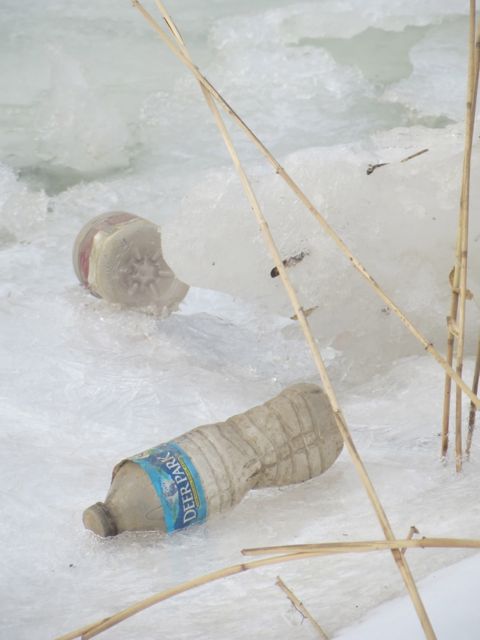
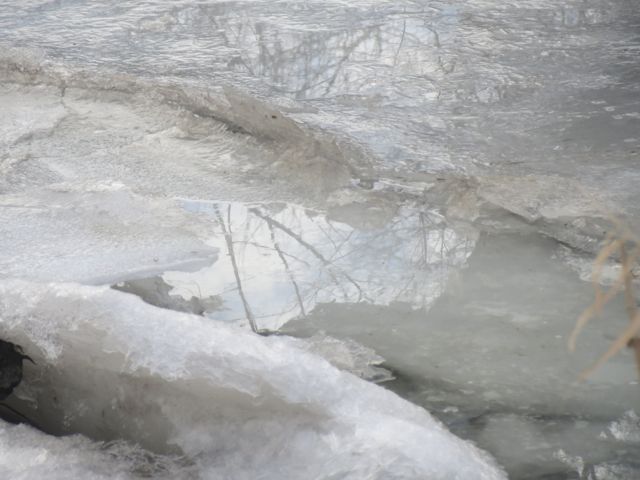
impermanent art
http://www.viralnova.com/beach-art/
This is really cool and it reminded me of Ava's art in it's impermanence and its connection to natural mediums/forms.


Homework Handout for RCF: 2/7/14
NEW HOMEWORK for 2/14/14 meeting of the Bryn Mawr Book Group
Read to p. 202 of The Glass Castle.
Write 3 pp. describing the kind of education you got outside of school.
This writing assignment steps off from our discussion about how Mom’s philosophy of schooling, in The Glass Castle, is like her philosophy of mothering: in both areas, she thought kids flourished best if they had no rules, no discipline, and lots of freedom….
We want you to think about the relationship between what you learned in school and what you learned outside of it. In giving you this assignment, we’re drawing on a book by Wendy Luttrell called Schoolsmart and Motherwise: Working-Class Women’s Identity and Schooling. It describes the difference between “book learning” and “commonsense knowledge,” and says that "real intelligence" can be attained outside school, from life experience.
Lesson Plan for RCF: 2/7/14
Lesson Plan for Riverside, 2/7/31
I. Sasha:
Welcome! We’ve brought two more students with us…
we want to introduce them. Some of you may be new, too,
and we want to learn your names.
--everyone have a name tag?
--anyone need a copy of The Glass Castle?
Take a moment to find one sentence in The Glass Castle that stood out to you.
Go around, say your name, and read that sentence. Don’t comment on it,

Homophobia at Bryn Mawr
One of my good friends on the rugby team came to Bryn Mawr her freshman year with plans to join the soccer team. On her first day the team seniors talked to the new players and one of the things that they took pride in/ bragged about was how they were the only "straight" team at Bryn Mawr. This made my friend really uncomfortable and she quit the team that week.
I don't know all of the soccer players but I do know that this isn't the first time that I've heard from players on the soccer team that the team has some homophobic people on the team. This summer I worked at Bryn Mawr with a girl on the soccer team and we would occacionally talk about our teams. So one day I brought up the story my friend told me. The girl I worked with admitted that it happened and that she didn't think it was right.
I'm surprised that this is a thing at Bryn Mawr and really want someone to explain this to me because I don't understand how it wasn't addressed.

A variety of white? black? yellow? Was I color-blind?
I’ve never understood the variety of Whites or Caucasian as you may point out. In Malaysia, the media often portrays a single type of White, the privilege one. There’s no such thing as poor whites, Latinos or a Jewish background. As long as you have white skin, you are considered “Guai Loi” which means ghost guy or white person. My experience at Bryn Mawr has taught me otherwise. A lot of my close Jewish friends taught me that Jews have been through a lot to get to where they are now. One of my most memorable lectures that I saw my Jewish friends fall into tears was a speech by Norman Finkelstein’s “How to Resolve the Israel-Palestine Conflict”. As a fellow Malaysian who indirectly supports Palestine based it’s cruel history, seeing my Jewish friends blamed for being Jews was quite heartbreaking. I can never understand the true power dynamics that was involve. I find it quite interesting how a significant number of Jewish people I know come from hardworking families but are also blamed for their cruelty towards the Palestinians. I can see some form of grudge sometimes through silence. This will forever remain a sensitive topic at least in my circle of ‘diverse’ friends.

Diversity at Bryn Mawr
Something that I would like to focus on is Customs week at Bryn Mawr. Last year I was a customs person at Bryn Mawr and several very distinct conversations about Divertisy arose. The fisrt thing and something that has stuck with me since was a seemingly random questions about what populations were at group. The talk started off with asking about how many students of color attended Bryn Mawr. 60%, 50%, 40% or 20%. As it turned out most people who were people of color guessed lower than the actual percentage and the students who were not people of color guessed a higher percentage of attendence. This contuined until we had a real chance of looking at our preceptions and how they corresponded to our own backgrounds and identites. After about a half hour, they asked how many students who identified as 'full' native american had attended Bryn Mawr in the past five years. There was the option of 100, 20, 10 and 2. Most people guessed around 20... the actual numer was 2. two students in the past 5 years had identified as native american. Now I understand why this is such a low number as there are not large native american populations near or around Bryn Mawr, but this stood out to me. This fact shocked me as I grew up in New Mexico and have grown up with such integrated native american culture into my own, also for the fact that this is a population that contuinelsy is forgotten and overlooked and marginalized by society. I do admire that the customs week brought this up in conversation and was willing to really think about how weak our own diversity really is.
Too much "at-homeness"?
In The Ecological Thought, Timothy Morton argues that "Fixation on place impedes a truly ecological view," that "we want ecology to be about location, location, location. In particular, location must be local: it must feel like home; we must recognize it and think it in terms of the here and now, not the there and then" [but that] "ecological collectivity decisively can’t be rooted in 'place'....'my place in the sun' marks the beginning of all usurpation. 'Place' contains too much “at-homeness,” too much finality, for the ecological thought. Localism, nationalism, and immersion in the ideological bath of the lifeworld, won’t cut it anymore…We need collectivity, not community….it must be a collectivity of weakness, vulnerability, and incompletion."
What do you think? Post here a paragraph of your initial reactions to Morton’s idea, reflecting, from the p.o.v. of an environmentalist, on your own investments in and search for home. We’ll start class on Wednesday with these thoughts….PLEASE USE THE ECO-LITERACY TAG "English" on these postings.
ranking our happiness
Reading through the tasks David assigned for this week, I was intrigued by his mention of alternative measures of welfare, including Bhutan's Gross National Happiness Index. My brother-in-law, an environmental consultant in Portland, Oregon, was happy to point out that ideas like this get taken seriously in Oregon (did you know this, Lisa?). Another brother-in-law, a Maine environmentalist, called my attention to two other rankings of national happiness, apparently inspired by Bhutan's index, but using different criteria. The "domains" used in the U.N. study appear to be primarily the conventional economic ones; i.e. rich and ecologically wasteful countries rank high (U.S. 17th behind other developed countries), while the New Economics Foundation's Happy Planet Index gives more attention to ecology; e.g. how much happiness is currently achieved at the expense of future generations (U.S. ranks 114th; 9 of top 10 are Caribbean basin nations, with Costa Rica #1).

Remote Ready Biology Learning Activities
Remote Ready Biology Learning Activities has 50 remote-ready activities, which work for either your classroom or remote teaching.
What's New? Subscribe to Serendip Studio
A Random Walk
New Topics
-
3 days 22 hours ago
-
3 days 22 hours ago
-
3 days 22 hours ago
-
3 days 22 hours ago
-
6 days 21 hours ago
