
Serendip is an independent site partnering with faculty at multiple colleges and universities around the world. Happy exploring!

re-view of mosaics
I always regarded the mosaic as fragmented and broken. It is said that“the earliest theory of art… proposed that art was mimesis, imitation of reality.” Thus, whenever I saw the mosaic, I just directly interpret its broken nature as a reflection of our fragmented world, where is collaged by separated people, various emotions and different thoughts. But I forget how magic its connection power is. In other world, I tend to see mosaic as a broken world, but in fact, mosaic itself is a complete art with whole image and expression.
I think the reason is that I’m distracted by the “form” of art. Mosaic is magic because it challenges the way we used to value the art- “whether we conceive of the work of art on the model of a picture or on the model of a statement, content still comes first.” Mosaic is a kind of special art that attracting people first by its form. Moreover, it is the form of mosaic that still causes the interpretation.

Self Evaluation
If you had asked me what my definition of feminism was a few months ago, I probably would have said something simple like, “it’s the movement to gain equal rights for women.” Of course that is partially true – partially. Now if someone were to ask me about feminism, I wouldn’t be able to talk about it without also bringing up race, class, non-binary genders, etc. I think one of the most important things I have gained from this class is my understanding of the intersectionality and complexity involved in feminism; how it isn’t just about women’s rights – there are so many other factors involved and they all connect. Feminism really does affect everyone in so many different ways.

final web extension: can education fix inequality?
Feminism deals with so many issues, and to me it seems that one of the main issues is inequality. Inequality among people of different sexes, gender identities, sexualities, race, class and levels of ability are all issues that feminism aims to combat. I’m an education minor, and in two of my papers I write about education and its ability to overcome these issues of inequality and give children the same foundation and opportunities, as well as teach them not to discriminate and to continue fighting against inequality. In my last web event, I claim that education is “a relatively easy place to start” breaking gender norms and helping feminism achieve its objective of closing the gender wage gap. However, I feel the need to reevaluate that claim. Education certainly can be a good starting point for feminist activists, and it can have a huge effect on future generations and how the feminist agenda continues decades from now… but educational reform is a very complicated ordeal. Additionally, successful educational reform shouldn’t only target gender norms, but a whole range of inequalities that affect our society and our schools. In the public schools that I went to, and in the middle school that I’ve visited for the past two years as a field component of education classes I’m taking here, gender inequalities are not as apparent as inequalities among the students from different socioeconomic classes.

Borders
When you live in a suburb of Cincinnati, you orient yourself by the highways. Get on I-71 and head south into the city. Or you could take a detour on I-275 and take the long way, avoiding the city itself as you drive into Kentucky. However, if you head just a little bit east on 275, you’ll hit Terrace Park, while west will get you to Sharon Woods. Anywhere North and you’re probably heading the wrong way because it’s just cornfields until you hit Columbus an hour and a half later. Let’s stick to the simple things, though, and head South, straight into Cincinnati.
But where does Cincinnati start?
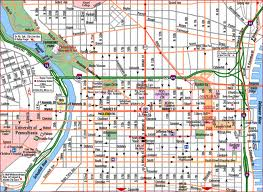
Philadelphia has a border, a river on either side, and a clear, at least from this student’s point of view, delineation between the city and the surrounding areas. Much like the maps we built in class, even detailed published maps use the Schuylkill and the Delaware as the boundaries of the map:

[Re-write] Being A Participant in Art -- Discussing with Kaprow And Sontag
Before my trip to the Old City, I thought it was the spectator that made the picture. But this recent experience helped me realize that it was not that simple. It is not only the audience makes the picture, but also the performer, the creator and the artwork. These elements together make the "participants", who are actively engaged in the art or playful activities and jointly infuse dynamics and diversity into the work. The art is not complete without either the artist or spectators. A work engenders its true meanings with its participants. This also corresponds to Sontag's article on Against Interpretation. We should learn to "see more, to hear more, to feel more".


Critical Play Rewrite
“It’s beautiful. No, it’s not quite aesthetically beautiful, but… It’s beautiful. I mean, the history, the people. It’s not the best part of Philly, but exactly because it’s not perfect, it has potential for improvement.”
A Temple student told me so on the train to North Philly, during my last trip for this class. Her words reminded me of what Sharon Zukin said, “the soul of a city is often felt to be in the long-time residents”. She suggested that I talk to some local folks, but unfortunately there was little people outside on that snowy day.
I planned to see the mural which has RISE on one side and SHINE on the other. In the photo online, it’s visible in distance, the pure white letters prominent among the vibrantly colored squares in the background. But standing right in front of the mural, I saw something else hidden under the shiny surface.
The squares were not just colors, but portraits of artists of this project and residents of this area. By incorporating these portraits, the mural showed respect for the people who gave it life, and connected art with everyday life.
The letters were not purely white, either. Scribbles were all over them. Voice. Inspired. Attitude. Power. Soul. History. Dreaming. Beautiful. We believe life. Love. Hope.

And, In the End.....
“Everything that’s difficult you should be able to laugh about.”-Louis CK
“Yeah, my finals had me laughing. Laughing until I had no tears left to laugh with.”-Abby ACK
. Play and humor are two concepts that go together hand-in-hand. Levels of humor easily find parallels in the levels of play: simple, critical, and deep.
Simple play is the first step in the spectrum of play. In terms of humor, simple play to the least thought provoking forms of humor. The jokes are funny, but this humor is not characterized by biting satire and sublime revelation. It’s not "lesser”, in the sense that it should come secondary to the other forms of humor, but it is the only genre that includes fart jokes. I can’t say I’ve ever heard a fart that made me reevaluate my beliefs and the truths of the universe. I have never, and will never, use flatulent humor as the lens through which I view the world. However, farts are just a small part of humor in simple play.
Simple play humor is the baseline upon which other forms of humor grow. It is the bare essential elements of comedy, rather than the concepts that can sustain a story. Take, for example, the Monty Python sketch The Funniest Joke in the World.

Remote Ready Biology Learning Activities

Remote Ready Biology Learning Activities has 50 remote-ready activities, which work for either your classroom or remote teaching.
What's New? Subscribe to Serendip Studio
A Random Walk
New Topics
-
4 days 2 hours ago
-
4 days 2 hours ago
-
4 days 2 hours ago
-
4 days 2 hours ago
-
1 week 1 hour ago
