Serendip is an independent site partnering with faculty at multiple colleges and universities around the world. Happy exploring!

activities for teaching biology

Resources for Teaching and Learning about Evolution

These Teacher Notes provide (1) suggestions for teaching evolution to students with religious concerns, (2) a review of major concepts and common misconceptions concerning natural selection, with recommended learning activities, (3) a review of major concepts and common misconceptions about species, descent with modification, and the evidence for evolution, with recommended learning activities, and (4) recommended general resources for teaching about evolution.


Resources for Teaching and Learning about Evolution

This annotated compilation of some of the best resources for teaching and learning about evolution includes activities, videos and articles. In the attached file, the first section provides general and introductory resources and the second section provides resources for understanding and analyzing the evidence.

The attached file has brief descriptions of the resources with links.


A Scientific Investigation – What types of food contain starch and protein?

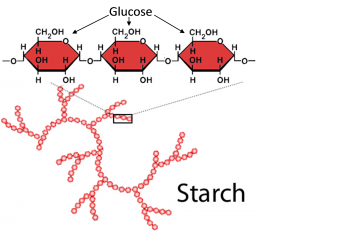
Starch molecule

In the first part of this activity, students use basic information about the structure, functions, and synthesis of starch and proteins to understand why certain parts of plants or animals contain starch and/or proteins.

Then, students practice the scientific method by carrying out key components of a scientific investigation, including generating hypotheses, developing experimental methods, designing and carrying out experiments to test their hypotheses, and, if needed, using experimental results to revise their hypotheses. (NGSS)

Download Student Handout: PDF format or Word format

Download Teacher Preparation Notes: PDF format or Word format

Vitamins and Health – Why Experts Disagree

In this discussion/worksheet activity, research concerning the health effects of vitamin E is used as a case study to help students understand why different research studies may find seemingly opposite results. Students learn useful approaches for evaluating and synthesizing conflicting research results, with a major focus on understanding the strengths and weaknesses of different types of studies (laboratory experiments, observational studies, and clinical trials). Students also learn that the results of any single study should be interpreted with caution, since results of similar studies vary (due to random variation and differences in specific study characteristics).

The Student Handout is provided in the first attached file and the Teacher Notes are provided in the second attached file.

Carbohydrate Consumption, Athletic Performance and Health – Using Science Process Skills to Understand the Evidence

This discussion/worksheet activity is designed to develop students' understanding of the scientific process by having them design an experiment to test a hypothesis, compare their experimental design with the design of a research study that tested the same hypothesis, evaluate research evidence concerning two hypothesized effects of carbohydrate consumption, evaluate the pros and cons of experimental vs. observational research studies, and finally use what they have learned to revise a standard diagram of the scientific method to make it more accurate, complete and realistic.

The Student Handout is provided in the first attached file and the Teacher Notes are provided in the second attached file.

Resources for Teaching Cancer Biology

These Teacher Notes describe multiple learning activities that introduce students to varied aspects of cancer biology. These Teacher Notes also describe multiple sources of reliable information about cancer and provide suggestions about how to convert information sources to learning activities.

Using Molecular and Evolutionary Biology to Understand HIV/AIDS and Treatment

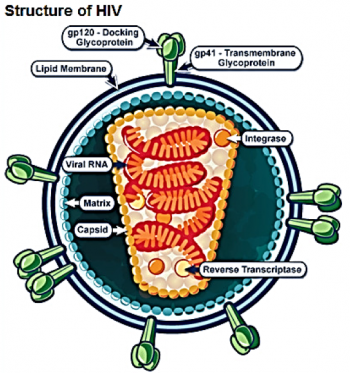
Structure of HIVThis analysis and discussion activity introduces students to the biology of HIV infection and treatment, including the molecular biology of the HIV virus lifecycle and the importance of understanding molecular biology and natural selection for developing effective treatments.
The questions in this activity challenge students to apply their understanding of basic molecular and cellular biology and natural selection and interpret information presented in prose and diagrams in order to understand multiple aspects of the biology of HIV/AIDS and treatment.

How Mistakes in Meiosis Can Result in Down Syndrome or Death of an Embryo

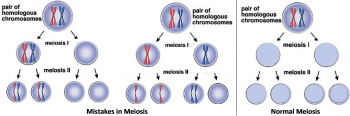
In this minds-on analysis and discussion activity, students learn how a mistake in meiosis can result in Down syndrome. Students also analyze karyotypes to learn how other mistakes in meiosis can result in the death of an embryo. Finally, students consider how a health problem can be genetic, but not inherited.

The Student Handout is available in the first two attached files and as a Google doc designed for use in online instruction and distance learning. The Teacher Notes, available in the last two attached files, provide instructional suggestions and background information and explain how this activity supports the Next Generation Science Standards (NGSS).

Should You Drink Sports Drinks? When? Why?

The questions in this activity help students to understand the effects of consuming sports drinks and when and how the consumption of sports drinks can be beneficial or harmful. This activity provides the opportunity to review some basic concepts related to osmosis, cellular respiration, mammalian temperature regulation, and how our different body systems cooperate to maintain homeostasis.

 The first and third attached files have the Student Handout and the second and fourth attached files have the Teacher Notes.

Molecular Biology: Major Concepts and Learning Activities

This overview reviews key concepts and learning activities to help students understand how genes influence our traits by molecular processes.  Topics covered include basic understanding of the important roles of proteins and DNA; DNA structure, function and replication; the molecular biology of how genes influence traits, including transcription and translation; the molecular biology of mutations; and genetic engineering. 

To help students understand the relevance of these molecular processes, the suggested learning activities link alleles of specific genes to human characteristics such as albinism, hemophilia, sickle cell anemia and muscular dystrophy. Suggested activities include analysis and discussion activities, hands-on laboratory and simulation activities, web-based simulations, and a vocabulary review game.

The attached files have the overview of key concepts, with descriptions of relevant learning activities and links to the activities. 

Syndicate content