
Serendip is an independent site partnering with faculty at multiple colleges and universities around the world. Happy exploring!

Plastic?
Today, at the ever-surprising space that is my observation spot, there is melted plastic covering a lot of the steps. Tuesday night, while walking out of Erdman, I saw a small fire inside the circle. I didn't react to it because I could hear people around it and they did not seem concerned. Maybe they were burning some particularly nasty graded assignment or conducting an experiment or getting rid of a bad memory. I don't know. I guess I figured they must have had a reason.

Cold
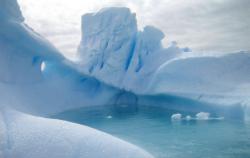
I went to my site sit this morning. I looked at the cut vegetation and I felt one sensation, COLD. This got me thinking about whether there is any connection between our society’s dislike of the cold (think about how much they overheat the dorms in the winter) and our views towards global climate change. It seems that climate change is helping to speed up the inevitable warming of the planet (http://www.ecy.wa.gov/climatechange/whatis.htm)

Monday's plan
here's the map to show you where we're going. and here's the plan:
we will gather @ the BMC campus center by 1:10 to walk together to Ashbridge Park
1:25-1:30: sara.gladwin, ekthorp, sarahj open our shared event
1:30-1:45: eetong, graham locate us @ the site via some history
1:45-2:00: hira, smacholdt share some poetry
2:00-2:15: froggies315, srucara supply food to fuel each of our wandering off on our own...
2:15-2:20: sara.gladwin, ekthorp, sarahj call us together to close the event, and we return to campus
before and after the day (on-line and/or in class):
rachelr, mturer reflect (lead us in reflecting?) on what happened....

Spirit: maybe the answer we are looking for!
One word which has been mentioned rather rarely, in our readings, in our discussions, in our postings, is spirit, or spirituality. Once I notice this lack, it becomes glaring, conspicuous in its absence, since in many instances it gives the answer, the resolution to our dilemmas, the center which would hold together our ethics and our analysis. If we start to notice, as native people's do, that everything has a spirit, its right to its exist becomes clear. Our patriarchal, human-dominated, nature-dominating, exploitive civilization is partly based on, or justified by, the notion that only humans have a soul. Even science has carried on this view, assuming that since we have larger brains and a certain kind of self-reflective consciousness, that therefore we are in a different category completely from any other creature. Of course this view is even scientifically breaking down, as we find out about communication and creativity in creatures like dolphins, chimpanzees, elephants--and fruit flies! But there is still an assumption that we count more, because we are able to think in this way that has allowed us to develop our technology. It goes on reinforcing the view that we have rights over everything else.

Labeling Clients and education
Just thoughts. Really incoherent thoughts:
I'm thinking about the "How Offenders Transform Their LIves" reading in a pedagogical frame. It's hard. Here these counselors are--trying to help out these "clients" by ways of telling them to "look inside themselves" to see whether or not they've "changed". But at the same time, these offenders want guidance--want people to give them a go and label that says that they're going to be okay or on the road to being delabeled. In other words, how do you guide people while still empowering them?
Quote:
"'Readiness' is clearly a complicated negotiation between clients and counselors. Clients are told that the change has to happen from within themselves, yet client self-declarations of 'being ready' are not enough to quality as evidence of success." (Shadd Maruna, Thomas P LeBel, Michelle Naples and Nick Mitchell)
Maybe my problem with their analysis is the issue that the counselors seem to be having in attempting to assist these inmates: Isn't it a problem that we're solely concerned with the labels being imposed onto the offenders? Sure, they're the ones who we are mainly concerned with, but to identify what titles they place on the counselors would 1) reveal what issues they may have with the process of being "readied" and 2) in a way, give them a place to actually label others/give them a place to become more confident in their own abilities.
This is a little too short. I'll come back to this.

Photography as a metaphor
In Chapter 7 of the Little Book of Contemplative Photography, “Making Meaning”, Zehr talks the active nature of “receiving” in photography. He calls the still, non-contextualized image of a photo, chaos, and the photographer/interpreter is responsible for creating order/coherence. It is we who, frame, organize, and make meaning of the images we choose to photograph. This, of course, is a metaphor for our experience of the world. The objective world, although it does have its own functional order, does not have “meaning” without the imposition of human perspective. Is it an empowering concept—that people can decide what meaning they will derive from the world? We all do it, but we don’t all consciously or actively do it. It echoes this speech by David Foster Wallace called This Is Water, in which Wallace says that the value – the real value -- of our liberal arts educations is that we are given the tools to escape our crippling solipsism and – our lens of selfishness, and apply new, healthier, more productive lenses. Thus, in situations which inconvenience us, we can choose how to interpret them, and thus, how to react.
The troubling thing is, not everyone can have a liberal arts education. Now everyone can take photos or make art. So how do you teach someone to feel empowered, independent, and autonomous about their lives and their ability to control and interpret their experiences? Especially when they are so systemically degraded…

eating animals
Before I fell asleep last night, I opened to a random page in book called Eating Animals by Jonathan Safran Foer. I read the whole book a few years ago, and I liked it even though Foer didn’t convince me to go vegetarian. The coolest part of this book is about stories. Foer says that the important thing about food is not the activity of eating, but the stories we tell ourselves and our children about why and what we eat. I agree. What’s the story of your favorite meal?


An Interdisciplinary Walk
During our interdisciplinary Ecological and Geological ramble with the EcoLit Esem group, I had acquired a new awareness of the physical region that is the Bryn Mawr College campus. We had walked through the campus and identified some of the rock types which were used to build the buildings (Taylor built out of Baltimore Gneiss, the Pem’s built out of Wissahickon Schist, a rock which is abundant in the area). Both types of rock had distinct specifications and one was more grainy and darker than the other. On the stones making up Pem Arch, we found the rock to be home to some dark green moss as well (perhaps remnants of the ivy and other vegetation which once grew there a while ago?). I learned that Taylor is the highest point of the hill and “Bryn Mawr” – which means “big hill” inevitably must have haven created with Taylor Hall as the centermost point, on top of the big hill – in the middle of everything. This still stands true to this day as much of the campus extends in all directions out of Taylor Hall. It was a glorious sight to walk down from Taylor towards the hill directly atop the gymnasium and looking at the view towards the valley and the slopes that surrounded us. I noticed the immensity of the slopes and hills that make up Bryn Mawr’s campus unlike any other time (I’ve only lived in Brecon so far, so I walk through numerous hills every day multiple times just to get to the main campus). It was evident that slopes are a big part of the campus’s make up. Furthermore, we discussed the identity and history of Rhoad’s pond.

Remote Ready Biology Learning Activities

Remote Ready Biology Learning Activities has 50 remote-ready activities, which work for either your classroom or remote teaching.
What's New? Subscribe to Serendip Studio
A Random Walk
New Topics
-
6 days 2 hours ago
-
6 days 2 hours ago
-
6 days 2 hours ago
-
6 days 2 hours ago
-
1 week 2 days ago
