
Serendip is an independent site partnering with faculty at multiple colleges and universities around the world. Happy exploring!

Deny thy comfort, and refuse thy cozy pauses.
A handful of postings ago, I wrote a short one called “Everybody’s Them & Porous Perspectives” and it was about viewing our self and everyone else’s self as a center point; we are all center points. So, if everyone is their own center point, somehow our centrality or individuality cancels out with everyone else’s exact same position, so we are a bunch of me’s. A bunch of points. Points on a grid, evenly spaced out, spaced into infinity. I wonder if it matters that there is a finite amount of me’s currently on our planet. But then to consider and calculate our vastness over time, our growth, our expansion, and our already finished presences — I think if we cannot count and determine an exact number, than it is incalculable, hence, infinite. Effective infinity. There is a certain peace, a certain relief in infinity. A lessening of burden. If we know we cannot comprehend infinity, we can accept that, and then not try and deal with the whole. We can deal with our immediate range of vision, the section of the grid points we can see, and the spaces we can see.

Reframing Environmental Education
Environmental education is an effort to teach how natural environments function and the ways people can change their habits and behavior in order to live more sustainably. This form of education aims to foster more ecological intelligence, environmental consciousness, and more caring of the earth. One issue with environmental education, though, is that it often calls for “providing more positive opportunities for contact with nature among children and adults as an integral part of everyday life” (159). By limiting the scope to connecting students to “nature” or to wildscapes free from pollution, skyscrapers, and waste, students from cities who lack access to these outdoor spaces are inhibited from getting the “environmental education” experience. There is a bias in environmental education toward natural, pristine spaces, when in actuality students should be learning about their own communities; the environments they live in, breathe in, and attend school in. This issue of access to untouched outdoor spaces is especially the case in Washington D.C. where certain neighborhoods have disproportionately high rates of pollution compared with other parts of the city. Students who do not have access to “nature” as well as those who live in communities that deal with environmental racism, should learn more about their natural surroundings as well as means of action they can take to address environmental racism.

On being conned
I’ve been waving Rena Fraden's Imagining Medea: Rhodessa Jones and Theater for Incarcerated Women @ y’all for a couple of weeks now, and thought I’d take the time to write out a little of what I find so compelling about the book. It is really making me feel dissatisfied with the sort of writing we are getting, and making me be more thoughtful about ways in which we might help folks dig deeper, be more truthful.
If you don’t know the story of Medea, read about it here—it’s all about betrayal, abandonment, anger, “too much love.”
“Jones finds theatrical ways to interrogate the personal, surrounding the contemporary with the mythical, providing more texts, and thus context, for these women, so that each individual’s story is not isolated but always seen in relation to others…autobiography alone neither guarantees new insights nor changes behavior. As Joan Scott has argued, experience is not transparent but is ‘at once always already an interpretation and something that needs to be interpreted’ (p. 21).
"poverty porn"
While some of us were hanging out with Michael last Friday (waiting for the rest of us to show up), he mentioned another article, written by a professor of public policy @ Rutgers Camden, which he thought we might find of interest. He just sent me the link: Poverty Porn in Rolling Stone.

GMO A Go Go
Ok, so I know we're taking a break from All Over Creation, but I found this video the other day and thought it a little relevant to some of the topics in the novel. I think the Seeds of Resistance would approve.
Towards Day 12
Unfortunately, I had to miss class yesterday, but reading over the course notes, I am sure there was a very interesting discussion on different stories and perspectives on Camden. I was one of the many people who reacted negatively to Taibbi's article on Camden. What really frustrated me about the piece was that it seemed to provide a very narrow perspective on Camden--solely focusing on the high crime rates and claiming that "in Camden, NJ, pretty much everyone you talk to has just gotten his or her ass kicked". After spending time in Camden, and seeing a much more positive side, I was dissappointed that the story felt so one-sided, so one dimensional--and was written in a very hopeless tone. Going back through to read some of my classmate's comments--jo, Agatha Basia, and Kelsey's in particular--reveals that we also have a single story experience of Camden. Who should tell the story of Camden? Is there one cohesive, accurate picture? Have our experiences in Camden also been one-sided? It's important to keep in mind that individuals' stories and lived experiences in Camden are significiantly classed, racialized, gendered, and sexualized--so there can be many different stories and perspectives. I believe that each place, each city carries many different stories--people can lead very different lives even when living one mile apart. What we have to keep in mind though, is to be careful of letting the assumptions articulated in Taibbi's article shape our interactions with people in Camden.

“How did I come to be who I am? And who am I becoming?”
“How did I come to be who I am? And who am I becoming?”
Identity is a funny thing. I feel like every day I am finding out new things about myself but at the same time I feel like I will never really know who I am. As Yukari Takimoto Amos put it “I have experienced culture shock and marginality in the United States and in this sense have been discovering and recovering myself every day since my arrival”. Although unlike Amos’ reference to arriving in the United States and her transition from being a part of the majority in Japan to becoming a minority in the United States, I grew up in the United States and have always been a part of the minority. However, I can still relate to this concept of constantly discovering and recovering of myself. Growing up I found that there were very few spaces in which I felt the privilege of fitting into a certain group especially with regards to race, sexual orientation, and class. I am not saying that I have not experienced some privileges due to certain aspects of my identity; however, I believe that I will never be able to fully identify with the way our society categorizes individuals and groups of people. Until very recently I found it hard to identify with any one group, mostly because of my racial ambiguity. This is the result of our system of categorizing being limited and limiting.

Nervous Conditions Book Idea
Nervous Conditions by Tsitsi Dangarembga
"Tambu, an adolescent living in colonial Rhodesia of the '60s, seizes the opportunity to leave her rural community to study at the missionary school run by her wealthy, British-educated uncle. With an uncanny and often critical self-awareness, Tambu narrates this skillful first novel by a Zimbabwe native. Like many heroes of the bildungsroman, Tambu, in addition to excelling at her curriculum, slowly reaches some painful conclusions--about her family, her proscribed role as a woman, and the inherent evils of colonization. Tambu often thinks of her mother, "who suffered from being female and poor and uneducated and black so stoically." Yet, she and her cousin, Nyasha, move increasingly farther away from their cultural heritage. At a funeral in her native village, Tambu admires the mourning of the women, "shrill, sharp, shiny, needles of sound piercing cleanly and deeply to let the anguish in, not out." In many ways, this novel becomes Tambu's keening--a resonant, eloquent tribute to the women in her life, and to their losses."
http://www.amazon.com/Nervous-Conditions-Import-Tsitsi-Dangarembga/dp/0954702336


Remote Ready Biology Learning Activities
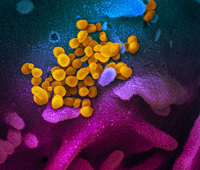
Remote Ready Biology Learning Activities has 50 remote-ready activities, which work for either your classroom or remote teaching.
What's New? Subscribe to Serendip Studio
A Random Walk
New Topics
-
3 days 19 hours ago
-
3 days 19 hours ago
-
3 days 19 hours ago
-
3 days 19 hours ago
-
6 days 18 hours ago
