
Serendip is an independent site partnering with faculty at multiple colleges and universities around the world. Happy exploring!

Porosity and Existing in Simultaneous Worlds
Porous: “having small holes that allow air or liquid to pass through; easy to pass or get through” (Merriam-Webster). Being porous is being open, understanding that we are not just one, standalone, unchanging, impenetrable being. It is understanding that nothing in our world ever is. However, the other aspect of being porous is that to be ‘easy to pass or get through’, it needs to be separate, distinct, and individual. It must, in some way, be nonporous. Can gas be porous? How does gas be considered porous if it is entirely penetrable, and in no way can it be nonporous? In order to be porous, one needs to be an individual entity. With porosity always comes distinction and self-identification. It is in some ways a given in our lives, but it can also be a choice – to see, experience, and interact with the world from different perspectives and vantage points of life. It helps determine who we are as people, and how we function as a society. I feel I have come to my own definition of the word, and my own understanding of the relevance of porosity in our lives to finding our homes and ourselves.

Limits of Porosity?
When I first entered this class weeks ago, I wrote an essay defining “home” as “self,” not a structure or a contained space, not family or friends. Home, within my own spirit. In some ways, this demonstrates just how porous a mindset I live with—pushing against the confinement of stability and instead reaching for fluidity. Yet in retrospect, I have come to realize just how bounded my view of “self” in fact was. In separating “self” from place and community, I failed to recognize that these crucial aspects of my life, in fact, create self.
“The material that passes through a body also transforms that body,” so described of the trans-corporeal self (Alaimo 3). Self is, in essence, the reflection of past experiences, relationships, and places. Self might not be inherent or fixed, but instead porous and dynamic. Occasionally my dad notices similar characteristics that delineate parallels between all of my aunts and I, hidden genetic connections dotting our identities of self. At least part of my self may stem from birth, but much of it grows throughout life.

Communal Exclusion: The Drawbacks to Communities of Sameness
Sometimes, when I think about all the people I know and consider friends and all the groups and activities with which I am involved, the places I have lived and the “homes” I have made, I realize I do not have anything I could definitively call my community. Community connotes a number of things-similarity, cohesion, belonging-and while I can easily identify the commonalities between myself and the others with whom I interact, I cannot help but be aware of the differences that exist and suggest difference. Here at Bryn Mawr, for example, I could consider myself a part of many communities: I live in Rockefeller Dorm, I run track and cross country, I am a sophomore student, I am part of this eco-literacy 360. The problem I encounter when I contemplate this, though, is the differences that not only persist between myself and the other individuals in the above communities, but also the fact that difference, separation, and exclusion, arguably the exact opposites of community, delineate and divide these groups to lend them existence in the first place. Scholars and the philosophically inclined have debated and continue to debate what makes an ideal community, but I feel that, before one can describe the ideal community, or community at all, they must first address the differences and divisions that separate one community from the other and how the inclusiveness of community exists alongside isolation and exclusion.

Ruth Wilson Gilmore
The Greater Philadelhia Women's Studies Consortium is bring Ruth Wilson Gilmore to the area in the fall.
I will be sure to get her to come to Bryn Mawr!


Swingsets, Trees, and Masjids
S.A.
“I contend that this sense of deep connectedness, of being saturated with nature, yet unique and separate, is one of the core gifts of middle childhood. The sense of continuity provides the foundation for an empathic relationship with the natural world. The sense of separateness provides a sense of agency, of being able to take responsible action for the natural world. The deep bond creates a commitment to lifelong protection. The next question might be, Are these experiences really specific to childhood?” (Sobel, 15) Sobel comments on the idea of connectedness and separateness. Both different feelings that work together to form a sense of commitment and care for the environment. From a personal standpoint, my “seperatedness” and “connectedness” would mix and mingle from the different places I would be in growing up and the back and forth between a very spiritual environment and a ‘natural’ one.
monstrous...or irresistible?!
kelsey--this one's for you! check out the 18 owl species with irresistable faces-->
maybe they are *not* monsters after all....? maybe we should reconsider
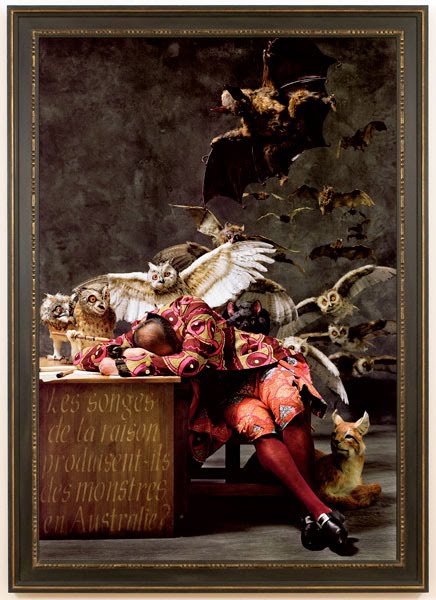
from Arts Without Borders: Where Creativity and Life are Inseparable

Remote Ready Biology Learning Activities
Remote Ready Biology Learning Activities has 50 remote-ready activities, which work for either your classroom or remote teaching.
What's New? Subscribe to Serendip Studio
A Random Walk
New Topics
-
3 days 21 hours ago
-
3 days 21 hours ago
-
3 days 21 hours ago
-
3 days 21 hours ago
-
6 days 20 hours ago
