
Serendip is an independent site partnering with faculty at multiple colleges and universities around the world. Happy exploring!

Diffraction: Literary Kinds
Looking back to the very beginning of the course, I remember thinking that I would be looking at some hardcore theory and a wider range of genres. At least this was the impression that I got from reading the first few readings in the course syllabus. I was really excited. However, the course took a slightly different path than the one that I described and I found myself, at times, struggling to find significance and also, limited by the limited genres that we encountered.
That said, I did enjoy the course as a whole – I see that by concentrating our (and my!) efforts on a handful of select genres, I was able to more fully appreciate and understand them. However, I still would have liked to see more of a theory-based spin on things, as I believe that it would have allowed me to really ground my claims as well as push me intellectually. Additionally, I wasn’t quite convinced that beginning the course with the digital humanities and the form of the academic paper was really effective. Perhaps building towards it would have been a great idea or, at the very least, I would have liked to link back to it throughout the course as I think that it is an emerging genre that is particularly pertinent in a classroom, where we are invited to generate “web events”.
Evolving and Emerging: The Possibilities of the Academic Paper
For this paper, I have worked with the "genre" of the academic paper. My paper details some of my numerous attempts to play with academic writing as well as defies the directed reading that traditional papers require. I highly encourage you to click on the different links out of order to see if it still makes sense. Also, please feel free to leave comments in the comment boxes on every page: they're there to spark conversations, just like Serendip's commenting function!

Subscribe to the Group Feed
If you would like to receive a daily email in the evening summarizing
the group's posts, please enter your email address:
Delivered by FeedBurner

Science vs. Humanities: A Closer Look at the Overlapping Methods of Inquiry
It is in human nature to classify, organize, and put into a structure the things we encounter every day; when we implement this “order” into our lives, we get a false sense of security, a sense of empowerment at being able to have control over the chaos that is our world. When we take time to actually study and analyze these categories and boundaries we have tried so hard to set however, we see that much overlapping and blurring of the lines occur, even in what is originally thought of as two very different things. Often times, there are distinctions created between two things when none is needed. One such example is the boundary set between the disciplines of humanities and science. Using the rules that define realities and dreams to define humanities and science, we see that the defining qualities and more specifically, the methods of inquiry in both science and humanities are so similar—so similar that they can be used for both—that they almost need not be different disciplines.


Teach In
Considering the other student teach-ins, I was extremely dismayed with my own performance. Being a Haverford freshman and therefore unfamiliar with Anne's teaching style and subsequent project structures, I felt as if I misunderstood the project and its intentions. I intended to open discussion that I felt was sparked earlier in the semester about sex work and in that way create an avenue for extending rich conversations that I felt were repeatedly cut short throughout our course time together. By providing a small sampling of pornography throughout the decades slightly before and since the feminist revolution, I hoped that, starting with a few discussion questions, we could continue our questionings of whether of not "feminist pornography" can really exist. I felt attacked at times for not being the absolute authority on knowledge of pornography, which I do not feel I pretended to be at any point. That being said, I had a wonderful experience watching the presentations and seeing the vast creative efforts of everyone in the class. I would like to think of the final performance as a direct way of getting the privelege to see how each of us manifests our ideas of feminism whether it be through zines, interviews, memes, games, or senses. Feminism necessarily creeps into many disiplines and spheres within our lives and these final projects as a whole demonstrated that.

Learning in Institutional Spaces
|
From Hack Education |
Jody Cohen, Education 290 |


Remote Ready Biology Learning Activities
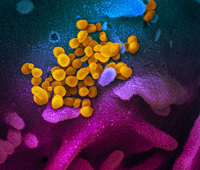
Remote Ready Biology Learning Activities has 50 remote-ready activities, which work for either your classroom or remote teaching.
What's New? Subscribe to Serendip Studio
A Random Walk
New Topics
-
1 week 6 hours ago
-
1 week 6 hours ago
-
1 week 6 hours ago
-
1 week 6 hours ago
-
1 week 3 days ago
