
Serendip is an independent site partnering with faculty at multiple colleges and universities around the world. Happy exploring!


Waiting for Godot?
While watching Adaptation, as soon as we were introduced to Charlie and Donald they reminded me so strongly of Estragon and Vladimir from Waiting for Godot or Rosencrantz and Guildenstern from Rosencrantz and Guildenstern are Dead (take your pick). Charlie is the thinker, the brain/head of the two. Donald is the feet, evidenced by the fact he's always eating and by his position on the ground, sliding around on his back when he first meet him. Their faults/virtues also stem from their relative head/feet position. Charlie's issues with adapting Orchid Thief seem to come from his over-thinking things: his concept is that he wants it just to be about flowers. His issues with women are also from over-thinking.

time and memory
something that we spoke about last week has still been wandering the quiet spaces in my mind - do we 'activate' time by doing things? this was a question posed in last tuesdays class and its still on my mind.
the concept of activating time captivates me. it means that time is only relevant in terms of things that have happened or things that are happening. it means that a man kept in a room with no windows would have no concept of time. but he would still have memory. he would still remember what he did before he went to sleep, after he ate etc. but would that memory be able to survive without milestones or would it all clump together?

How or Why?
In class on Thursday we discussed the difference between “how” and “why” in terms of searching for meaning in a situation. The “how” of an event was thought of as more scientific, physical, concrete, and objective, while the “why” of a situation may be considered metaphysical, abstract, subjective, and relate more to the humanities. This conversation was particularly interesting to me because it allowed me to hear the different viewpoints as to which one would provide more meaning for different people. The “why” could provide more meaning of an event because it is more subjective and allow for deeper interpretation.


Self-replication, power of creation...
After watching the film Teknolust, I thought back to my first web paper that addressed the idea of humanizing technology. In this paper I discussed the cyborg and the future of gender in robotics; I looked at various types of robot technology and the attribution of gender/ human characteristics to these technologies. I claimed that, "the more we actively interact with technology, the more desire there seems to be to humanize it--to make it not only an extension of ourselves, but to recreate what it means to be 'human' altogether." Thinking about this paper and these technologies in relation to Teknolust, I began wondering what it is about humans that makes us want to create things that look like us.

knocking things out, expanding the pool, or a little bit of both
On Thursday in Professor Grobstein’s class, we discussed science vs.

Remote Ready Biology Learning Activities
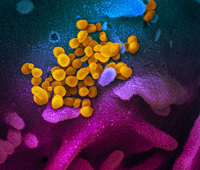
Remote Ready Biology Learning Activities has 50 remote-ready activities, which work for either your classroom or remote teaching.
What's New? Subscribe to Serendip Studio
A Random Walk
New Topics
-
5 hours 20 min ago
-
1 week 2 days ago
-
1 week 2 days ago
-
1 week 2 days ago
-
1 week 2 days ago
