
Serendip is an independent site partnering with faculty at multiple colleges and universities around the world. Happy exploring!

oh, the possibilities
I agree with TPB1988's opinion that "it would be a shame to return to the routine of a stereotypical English class." I've definitely enjoyed the uncharacteristically light reading requirements for the class thus far, but I'm pretty sure that most of us weren't given the opportunity in high schools or in other more "focused" literature classes to really study and analyze how the internet is quickly becoming a server for academic work, information, and just the formation of communities in general via blogging. A few months ago I met and chatted over coffee with a former editor for a publishing firm, and he warned me that print medium is taking a backseat to the media and technology.

Taking Advantage of Novel Alternatives
While I love to read classic novels that are normally studied in English classes I believe that our Literary Kinds class is special. This class has provided me with an opportunity to re-evaluate what a "genre" can be, and to be honest I think this will be one of the few English classes that doesn't mandate reading actual books. I think that we should take advantage of the opporunity to study different variations of text because we may never get a chance to do so again.


internal inconsistencies
Earlier in the semester, we read some theory on how the Walt Whitman Archive destroys the concept of a single narrative of Whitman's life, or a definitive version of any of his works. I'm interested in exploring works where this impossibility is evident even within a single version of a text. For example, the Sherlock Holmes novels and stories never seem to settle on a single interpretation of Holmes's character (or a single location for Watson's war wound); likewise, the original Dracula novel has very little internal consistency regarding details of vampire lore (or of the plot).

Fanfiction as an "Emerging" Genre
For the second half of the semester, I think it would be really interesting to look at fan fiction as an "emerging" genre. I use the quotation marks because Professor Taylor once had us read a work for class that was a continuation of Chaucer's notoriously-unfinished Canterbury Tales, and doesn't that count as a work of fan fiction? There are also additional Sherlock Holmes mysteries, suspiciously not written by Sir Conan Doyle and Pride

Playing off of identity...
I would really like to read actual books for the second half of the semester, and I am thinking that we could play off of the idea of identity. The Internet and blogs can both over display identity or keep one completely hidden; some people use it as a way to find themselves. And this identity can be found in many different was and for many different reasons. Some of my book suggestions are The Scarlet Letter, The Sound and the Fury, The Time Traveler's Wife, The Book of Salt, Invisible Man, The Lacuna, The Merchant of Venice, Bone (by Fae Myenne Ng), The Elegant Hedgehog… obviously we couldn't read all of these, but they're just a few ideas to choose from.

BOOKS!
OK, I've put some real thought into this and though it sounds nice to read more modern texts, I don't think I'm finished with the old quite yet. I know it might sound bizarre, but I've, for the most part, really enjoyed the books I read in high school. I like the suggestions of reading the Scarlet Letter, Moby Dick (not because Anne likes it, but because it is such an important book and I've never read it), maybe Charles Dickens, or Georgette Heyer! I want to read actual books, nothing online and I want to read great novels from the past. Can someone be on my side?

genre proposal: historical precedent
This is Draft 2: (For Draft 1 and notes, as well as everything written below and more, go to my blog entry "new genre proposal: editable")
I would like to propose a look at the historical 'growth' of genres. Looking at some different, widely accepted 'genres' and their changes over time. With six weeks, a look at three different 'genres,' giving two weeks to each would be proposed, although of course this is not strict. We would be asking the questions of what changed? What grew, what remained the same? Are these two even the same genre? and whatever other inquiries come to mind. Would we read academic criticism?

Remote Ready Biology Learning Activities
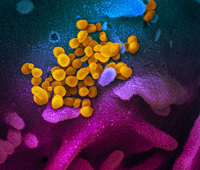
Remote Ready Biology Learning Activities has 50 remote-ready activities, which work for either your classroom or remote teaching.
What's New? Subscribe to Serendip Studio
A Random Walk
New Topics
-
2 days 6 hours ago
-
2 days 6 hours ago
-
3 days 9 hours ago
-
1 week 5 days ago
-
1 week 5 days ago
