
Serendip is an independent site partnering with faculty at multiple colleges and universities around the world. Happy exploring!

Why Categorize?
Why Categorize?
“The general public must infer mental illness from four signals: psychiatric symptoms, social skills deficits, physical appearance, and labels”
-Corrigan, 2000

The Demon Haunted World
I'm really enjoying reading The Demon Haunted World and I'm not sure if it is just because I agree with his ideas....but what I know for sure is that if I had come up with these ideas myself, I never would have found a way to convey them so well without offending the religious or the uneducated as Sagan does. I am impressed with how Sagan is able to discuss peoples' beliefs about the supernatural, for example, without insulting those who believe in things a scientist might deem outrageous. For example, on p. 30 Sagan writes "If you want to know when the next eclipse of the sun will be, you might try magicians or mystics, but you'll do much better with scientists.

Gene as a symbol
“When we know the sequence of the molecule that makes up all our genes, we will know what it is to be human. When we know what our DNA looks like, we will know why some of us are rich and some poor, some healthy and some sick, some powerful and some weak” (Richard Lewontin)


What Carl Sagan has to say about science and truth
When I started reading The Demon-Haunted World: Science as a Candle in the Dark by Carl Sagan, I did not really know what to expect. Sagan invites the reader to be critical and skeptical of things we read, see, or hear about. He wants us to distinguish between what is "valid science" and "pseudoscience." As a science major, I have always accepted science as factual information that is true until proven otherwise since I was young. In my current biology class, we are studying about paleontology which involves looking at fossil records of animals to infer relationships between extinct and living species.

Performance of false truths
After reading through Sagan's chapter, "Obsessed with Reality," which spends many pages discussing the sudden fame of Carlos / Jose Alvarez, I can't help but think of an experiment (ha, what a charged word 'experiment' is to me after reading Sagan...) by two anthropologists. A man and woman each dressed as "exotic" indigenous individuals, claiming to be from a ridiculously remote place that had never been discovered. They were put on display, and made themselves a traveling show about 10 or 12 years ago. We watched a documentary (mocumentary? I can't even remember now, interestingly enough) about their show, which featured these two actor/anthropologists dressed in fur and loincloths, parading around a CAGE putting on a show of being non-western foreigners.

Ownership of the body
Some of the continuation of our discussion on Tuesday of The Immortal Life of Henrietta Lacks brought me back to an exercise that we did in my bio 110 course when reading the book. Our assignment was to create an informed consent for for Henrietta, attempting to explain the basic concepts behind her cancer and cells, and leave room for the potential of further research on them should her cells in fact grow in culture. So I just thought that I would share what I came up with as an informed consent for that perhaps could have been given to Henrietta Lacks:

"Hallucinations" Chapter
After reading Sagan's chapter on Hallucinations, I am heartened to read that facts, and our understanding and manipulation of them, are not what make us normal. According to Sagan, normal lies somewhere between reality and fantasy. Most of us, perhaps despite what we say, believe in / have encountered things that cannot always be explained within the plane of reality...and even while making those claims, we still seem to understand, socially at least, that fantasy is just that. I am fascinated to think about this idea of a gray area--somewhere that rational people can somehow explain or suspend disbelief, without venturing over into the realm of pure fiction.
class notes 10/16
Class Notes 10-16-2010
Review of Path to Paradise
Anne – revelations about the limitations of the method and so much individualistic literary criticism due to our conversation of it. Book seemed personable with Berko's position.
Anne Dalke– did we get caught up in images and didn't advance an argument
ckosarek – yeah I saw it in my paper. You run the risk of bringing outside things
Anne Dalke– anyone else?

Remote Ready Biology Learning Activities
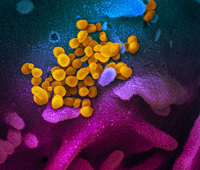
Remote Ready Biology Learning Activities has 50 remote-ready activities, which work for either your classroom or remote teaching.
What's New? Subscribe to Serendip Studio
A Random Walk
New Topics
-
3 hours 15 min ago
-
3 hours 20 min ago
-
1 day 5 hours ago
-
1 week 3 days ago
-
1 week 3 days ago
