
Serendip is an independent site partnering with faculty at multiple colleges and universities around the world. Happy exploring!

9/11 Report (Graphic Edition): Interpretation and Visual Creation
The original 9/11 report faulted inter-agency communication and personnel failures in US intelligence agencies such as the CIA, FBI, NSA. I remember reading numerous articles detailing the bureaucratic mishaps in Washington, but I never quite understood what was really meant by the highly technical and often redundant language used to describe government security functions. However, the graphic adaptation of the 9/11 report was able to crystallize and sharpen my muddled understanding of 'interagency miscommunications' by laying out scenarios, such as the panel on page 40 in which one of the agents agents says "I can't make heads or tails of this" and an FBI agent is shielding documents from the agent from the Justice Department.


Looking at this report from an anthropological point of view...
...I can't help but think about the way in which this narrative, despite being of a very fact-based report and tragically factual day, is *still* a constructed piece of non-fiction. Unsurprisingly there is no definition or justification given around terms like, oh, say, terrorist. Obviously the understanding and slant of those who craft the 9/11 report is clear and there is no need for the report to be an unbiased look at what terrorism is because its irrelevant to 9/11's direct issues and impact. That being said, it was hard for me to NOT read this as an anthropology major and say--"to these men, they are fighting for freedom and liberation and justice. What is the line where terrorism ends and freedom fighting begins? " How do we know what REAL terrorism is?

9/11
The graphic adaptation, I think, does a good job of conveying it's purpose (or at least what the authors said it was meant to be). I for one would have never read the commission report if it had not been for this novel. I think what's compelling about it, is that it relates words (which themselves are limiting) to the images we all know. I like that it gives the reader an image of what occurred on that hollowed day, before it explains the history behind the day itself.

Everyone believes what they want to... Right?
In class on Thursday we discussed how people have different realities based on their personal interpretations of what is "real". I discussed how I was completely convinced that Randall was the murderer in the Thin Blue Line, and not David. We discussed how this interpretation could have been because David was more personable and charismatic than Randall, and while yes this might be true I feel like I constructed that truth in my mind based on what I interpreted. To me Randall was completely flat in all affect that he showed. He didn't become upset or emotional at all in any interview that was shown and maybe it was just frustration with him retelling his story, but I took it as he was emotionally flat all around.
Autism and Vaccine cont...
- Andrew Wakefield and his article in the Lancet
- Response to his article
- Thoughts from last discussion...scientific communication. Do we have any suggestions for improvement
------------
From The Times

Remote Ready Biology Learning Activities
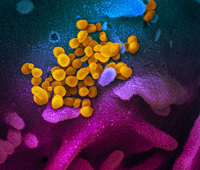
Remote Ready Biology Learning Activities has 50 remote-ready activities, which work for either your classroom or remote teaching.
What's New? Subscribe to Serendip Studio
A Random Walk
New Topics
-
5 hours 15 min ago
-
5 hours 20 min ago
-
1 day 7 hours ago
-
1 week 3 days ago
-
1 week 3 days ago
